How to Save Money: 15 Simple Strategies That Can Keep More of Your Paycheck
Learn 15 practical ways to save money, cut major expenses, automate savings, reduce debt, and keep more of every paycheck in 2026.
What if the reason you can’t save money isn’t that you don’t make enough—but that your money is disappearing in places you aren’t paying attention to?
Saving money doesn’t necessarily mean giving up everything you enjoy.
In many cases, the biggest opportunity isn’t cutting every $5 purchase. It’s identifying the expenses that quietly consume hundreds—or even thousands—of dollars every year and building a system that makes saving almost automatic.
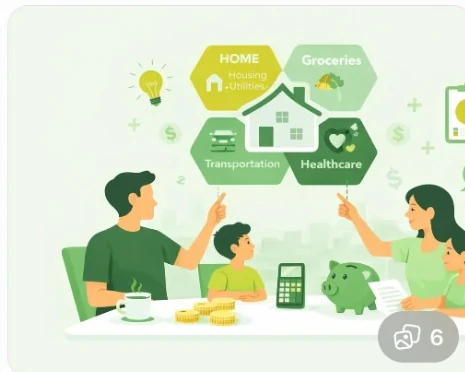
According to the U.S. Bureau of Labor Statistics, the average U.S. consumer unit spent $78,535 in 2024. Housing represented 33.4% of spending, transportation 17.0%, and food 12.9%.
That leads to an important lesson:
Saving money isn’t just about spending less. It’s about making better decisions with the biggest parts of your budget.

1. Find Your “Money Leaks” Before Cutting Your Lifestyle
Before creating a complicated budget, look at where your money actually went during the last 30 days. Our Budgeting & Tools hub has calculators that can help you turn those numbers into a workable monthly plan.
Check:
- Bank statements
- Credit-card statements
- Automatic payments
- Subscriptions
- Restaurant and delivery spending
- Grocery purchases
- Transportation
- Insurance
- Entertainment
- Online shopping
Then divide your spending into three categories:
Needs: Housing, utilities, basic food, transportation, insurance and essential healthcare.
Wants: Restaurants, entertainment, shopping, subscriptions and other discretionary expenses.
Financial goals: Savings, debt repayment and investing.
The objective isn’t to eliminate every “want.”
It’s to discover spending that doesn’t provide enough value to justify its cost.
2. Start With the Biggest Expenses
One of the biggest mistakes people make when trying to save is obsessing over $3 purchases while ignoring $300 or $500 expenses.
According to the BLS, average annual spending in 2024 included $26,266 on housing and $13,318 on transportation. Together, those two categories represented more than half of average household spending.
That means a small improvement in a major expense can sometimes have a much larger impact than eliminating dozens of tiny purchases.
For example:
- Saving $50 per month = $600 per year
- Saving $200 per month = $2,400 per year
- Saving $500 per month = $6,000 per year
Look at your largest recurring expenses first.
Ask:
Can I lower my housing cost?
Can I reduce my car payment or transportation costs?
Can I lower insurance premiums by shopping around?
Can I renegotiate services?
Can I eliminate recurring expenses I no longer use?
Big expenses deserve big attention.
3. Use the “24-Hour Rule” for Impulse Purchases
You don’t have to stop buying things you enjoy.
Instead, introduce a waiting period.
For nonessential purchases, wait 24 hours before buying.
If you still want the item tomorrow—and it fits your budget—you can make the purchase.
This simple pause can separate a genuine need from a temporary impulse.
Imagine spending $40 four unnecessary times every month:
$40 × 4 × 12 = $1,920 per year.
That’s almost $2,000 that could have gone toward savings, debt repayment or another financial goal.
4. Automate Your Savings
One of the easiest ways to save is to stop relying entirely on willpower.
Instead of waiting until the end of the month to see what’s left, move money into savings automatically.
For example:
Every payday → $100 automatically transferred to savings.
At $100 per paycheck:
- $200/month if paid twice monthly
- $2,400/year
- $12,000 over five years, before considering any interest
The Consumer Financial Protection Bureau recommends automatic saving as one way to make savings contributions consistent.
The principle is simple:
Save first. Spend what remains.

5. Build an Emergency Fund Before Life Forces You to Borrow
Unexpected expenses happen.
A vehicle needs repairs.
A household appliance breaks.
A medical bill arrives.
Income temporarily falls.
An emergency fund is money set aside specifically for unexpected expenses and financial emergencies.
Instead of worrying about building a huge emergency fund immediately, start with a realistic first target.
Your first goal could be:
$500
Then:
$1,000
Then work toward a larger reserve based on your household’s expenses and circumstances.
Don’t let the idea of needing several months of expenses prevent you from starting with your first few hundred dollars.
6. Keep Emergency Savings Somewhere Safe and Accessible
Emergency money generally has a different job from long-term investment money.
You want emergency savings to be accessible when you need it.
A savings account at an FDIC-insured bank is one option. Learn how rates and access differ in our high-yield savings account guide. FDIC insurance generally covers eligible deposits up to applicable limits, including $250,000 per depositor, per insured bank, per ownership category.
Remember that FDIC insurance is different from investment protection. Stocks, bonds and mutual funds aren’t FDIC-insured simply because you purchased them through a bank or financial institution.
7. Attack High-Interest Debt
Saving money while carrying expensive debt can be difficult.
Suppose you have a credit-card balance with a high interest rate.
Every month, part of your payment may go toward interest instead of reducing the amount you owe.
That doesn’t necessarily mean you should empty your savings to pay debt.
Instead, consider a strategy that addresses both:
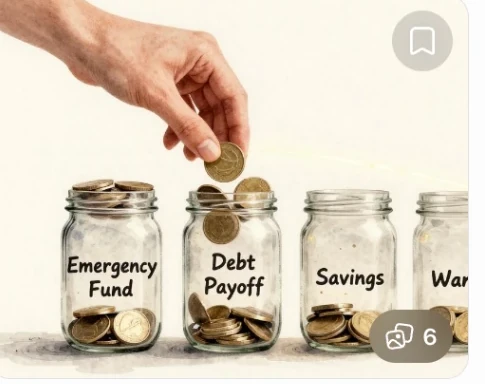
Build a starter emergency fund + aggressively reduce expensive debt.
Once high-interest debt is under control, more of your monthly cash flow can be directed toward savings and investing. Compare practical payoff approaches in our snowball vs. avalanche guide.
8. Stop Paying for Subscriptions You Don’t Use
Subscriptions are easy to forget because the payments are automatic.
Go through your bank and credit-card statements and make a list of every recurring charge.
You may discover:
- Streaming services you rarely watch
- Apps you forgot about
- Gym memberships
- Software subscriptions
- Premium memberships
- Cloud-storage plans
- Delivery memberships
- Duplicate services
Try the 30-Day Subscription Audit
Cancel or pause every nonessential subscription you haven’t used recently.
If you genuinely miss something, you can reconsider it later.
9. Reduce Restaurant and Delivery Spending Without Eliminating It
You don’t have to stop eating at restaurants.
Instead, give yourself a monthly restaurant budget.
For example:
$200/month restaurant budget
When it’s gone, you’re done until the next month.
According to BLS data, average consumer spending on food away from home—including restaurant, delivery and takeout meals—was $3,945 in 2024.
Even a modest reduction can add up.
If you reduce restaurant and delivery spending by $100 per month:
$100 × 12 = $1,200 per year.
10. Make Your Grocery Store Work for You
Before going shopping:
- Check your refrigerator and pantry.
- Create a meal plan.
- Make a shopping list.
- Compare prices.
- Avoid shopping while extremely hungry.
- Use foods you already have.
- Compare unit prices rather than simply package prices.
- Freeze food before it goes bad.
Food represented 12.9% of average consumer spending in 2024, according to the BLS. Average spending on food was $10,169, including $6,224 on food at home.
The goal isn’t necessarily to buy the cheapest food.
It’s to reduce waste.
Buying something you don’t eat isn’t saving money just because it was on sale.

11. Shop Your Insurance Every Year
Insurance premiums can become an overlooked recurring expense.
Consider reviewing:
- Auto insurance
- Homeowners insurance
- Renters insurance
- Life insurance
- Other recurring coverage
When comparing policies, don’t look only at the premium.
Compare:
- Coverage limits
- Deductibles
- Exclusions
- Discounts
- Customer-service considerations
A lower premium isn’t necessarily a better deal if the coverage is substantially different.
12. Make Your Car Cost Less
Transportation is one of the largest household expenses.
BLS data show that transportation averaged $13,318 per consumer unit in 2024, or about $1,110 per month.
Potential savings can come from:
- Comparing auto insurance
- Maintaining your vehicle
- Combining trips
- Avoiding unnecessary driving
- Comparing fuel prices
- Refinancing when appropriate
- Keeping a reliable vehicle longer rather than replacing it unnecessarily
- Evaluating whether a second vehicle is truly necessary
A few dollars saved on gas won’t transform your finances.
But reducing a large car payment or unnecessary vehicle expense can.
13. Turn Small Savings Into Long-Term Wealth
Saving is only the first step.
Once you have appropriate emergency savings and have addressed high-cost debt, you can consider investing for longer-term goals.
One reason investing can become powerful over long periods is compound growth.
Compound growth allows returns to potentially generate additional returns over time.
For example, if $1,000 earned a hypothetical 5% annual return and the earnings remained invested, the balance would grow to approximately $1,050 after one year and $1,102.50 after two years.
That’s a simplified illustration—not a guarantee of investment performance.
Investments can lose value.
But the broader lesson is important:
Time can be one of the most valuable assets you have.
14. Take Advantage of Employer Retirement Benefits
If your employer offers a retirement plan with an employer match, understand how the matching contribution works.
Employer contributions can provide an additional source of retirement savings, subject to the plan’s rules.
For 2026, the IRS says the employee elective deferral limit for many 401(k) plans is $24,500, subject to applicable rules and additional limits.
The 2026 IRA contribution limit is $7,500, according to the IRS.
These limits are not recommendations to contribute the maximum. Your appropriate contribution depends on your income, expenses, debt, emergency savings and financial goals.
15. Give Every Dollar a Job
Here’s perhaps the most important change you can make:
Stop thinking about money only after you spend it.
Instead, decide where your money should go before the month begins.
For example:
| Purpose | Monthly Amount |
|---|---|
| Housing & utilities | $2,000 |
| Food | $700 |
| Transportation | $500 |
| Insurance | $300 |
| Debt repayment | $400 |
| Emergency savings | $300 |
| Investing | $300 |
| Entertainment | $200 |
| Miscellaneous | $300 |
Your numbers will obviously be different.
The point is that money should have a destination.
The $500-a-Month Saving Challenge
Want to make this practical?
Try this:
Find $500 in your monthly budget.
You don’t have to find it in one place.
For example:
- $100 from subscriptions and recurring services
- $100 from restaurant/delivery spending
- $100 from transportation
- $75 from groceries
- $75 from impulse purchases
- $50 from miscellaneous expenses
That’s:
$500 per month
or
$6,000 per year.
The exact numbers won’t work for everyone, but the exercise demonstrates an important principle:
You don’t necessarily need one giant financial breakthrough. You need several small decisions that you can repeat consistently.

The 7-Day Money-Saving Reset
If you want to start today, try this seven-day challenge.
Day 1: Look at your bank statements
Identify where your money went during the last 30 days.
Day 2: Cancel unused subscriptions
Look for recurring charges.
Day 3: Create a grocery plan
Use food you already have before buying more.
Day 4: Review your largest bills
Look at housing, transportation, insurance and debt.
Day 5: Create an automatic savings transfer
Even $25 or $50 is a beginning.
Day 6: Create a 24-hour purchase rule
Don’t immediately buy nonessential items.
Day 7: Set your next financial target
Choose one:
$500 emergency fund
$1,000 emergency fund
Pay off one credit card
Save your first $5,000
Increase retirement contributions
Make the goal specific.
The Bottom Line
Saving money isn’t about living a miserable life.
It’s about making sure your money is being used intentionally.
The average American consumer unit spent $78,535 in 2024, with housing, transportation and food representing some of the largest spending categories.
That means some of the biggest savings opportunities may be hiding in the biggest decisions.
Start small.
Automate what you can.
Control recurring expenses.
Reduce expensive debt.
Build emergency savings.
Then give your long-term money time to grow.
The goal isn’t simply to spend less money.
The goal is to keep more of the money you earn—and give that money a purpose.
Sources & References
- U.S. Bureau of Labor Statistics — Consumer Expenditures 2024
- Consumer Financial Protection Bureau — Building an Emergency Fund
- Federal Deposit Insurance Corporation — Deposit Insurance
- U.S. Securities and Exchange Commission / Investor.gov — Saving and Investing
- Internal Revenue Service — 2026 Retirement Contribution Limits
Frequently asked questions
Q.How much money should I save each month?
There is no single percentage that works for everyone. Start with an amount you can consistently save after essential expenses, debt obligations, and other priorities, then increase it when your cash flow improves.
Q.Where should I keep my emergency fund?
Many people use an accessible savings account at an FDIC-insured bank. Verify the institution's insurance coverage, withdrawal rules, fees, and interest rate before choosing an account.
Q.Is it better to save money or pay off debt?
It depends on the debt's interest rate and your emergency reserve. A balanced approach often starts with a small emergency fund, then prioritizes expensive debt while continuing modest savings.
Q.How can I save money when I do not make much?
Start with the recurring expenses that provide the least value, automate a small transfer, and review major costs such as housing, transportation, and insurance. Increasing income may also matter when essential costs leave little room to cut.
Q.How can I stop spending money impulsively?
Try a 24-hour waiting period for nonessential purchases, remove saved payment information from shopping sites, unsubscribe from promotional emails, and set a monthly discretionary limit.
Q.How does compound growth help savings grow?
When invested money earns returns, those returns may generate additional returns over time. Returns are not guaranteed, however, and investments can lose value.
Related Articles
High-Yield Savings Accounts Explained Simply
What they are, what to look for, and which features actually matter (vs. marketing fluff).
6 min read
Banking & SavingBanking Basics for Immigrants: Opening Your First U.S. Account
Documents you need, banks that work with newcomers, and how to avoid the fees that drain new arrivals.
6 min read
AI EconomyHow to Use AI to Get Out of Poverty in 2026 (Step-by-Step Guide for Beginners)
A practical, beginner-friendly guide to using AI to learn a marketable skill, start freelancing from zero, and turn one-off gigs into stable income.
12 min read
AI EconomyHow AI Can Help You Manage Money and Build Wealth (Beginner's Guide)
A beginner-friendly guide to using AI to budget smarter, pay off debt faster, learn investing, and avoid costly money mistakes in 2026.
10 min read